Biodiversity Initiatives
Basic concept
The Mitsubishi Steel Group supports international efforts to safeguard and make a positive impact on the natural environment. Based on the understanding that biodiversity conservation and recovery are essential to a sustainable society, we are implementing the following measures in line with the Mitsubishi Steel Group Environmental Policy.
- Ascertaining the impact of our business activities on biodiversity and striving to protect natural capital and to minimize our impact based on the LEAP (locate, evaluate, assess, prepare) approach recommended by the Taskforce on Nature-related Financial Disclosures (TNFD)
- Promoting and continually improving responsible procurement across our supply chain through monitoring in accordance with the Basic Procurement Policy of the Mitsubishi Steel Group and the Sustainable Procurement Guidelines
- Strengthening awareness among all those who work in the Group of matters related to the conservation and recovery of natural capital; working to promulgate such awareness through participation in environmental conservation activities and other initiatives; promoting initiatives in cooperation with our partners, local communities, and other stakeholders
To minimize our impact on natural capital and biodiversity throughout our business activities, we will continue to pursue appropriate response while emphasizing dialogue with stakeholders through regular SR and IR meetings and discussions with local governments. We will realize sustainable value creation by identifying nature-related risks and opportunities and incorporating them into our business strategies.
Assessments of nature-related dependencies and impacts through the LEAP approach
We assess nature-related dependencies and impacts in our businesses in accordance with the LEAP (locate, evaluate, assess, prepare) approach recommended by the Taskforce on Nature-related Financial Disclosures (TNFD).
We have currently identified interactions between our business activities and nature in the “locate” (identify priority locations) stage of the LEAP cycle. We are proceeding with assessments of dependencies and impacts on the natural environment in the evaluation stage. Future plans call for advancing to the stages of assess (financially assess risks and opportunities) and prepare (establish strategies and targets).
Review of natural dependencies and impacts
The Group uses ENCORE*1 and other tools to analyze how our business activities depend on and impact natural capital and review manufacturing in direct operations and procurement of mineral resources in the upstream supply chain.
This analysis showed dependencies on climate regulation, water purification functions, and other natural functions in the procurement of mineral resources in the upstream supply chain.
It also showed that manufacturing in direct operations has various impacts, including the discharge of soil and water pollutants and noise and vibration disturbance. Procurement of mineral resources in the upstream supply chain tended to have a stronger impact on nature than direct operations—it was shown to involve a high possibility of impacting nature through resource use in fields like fresh water, seas, and mining, GHG emissions, discharge of waste such as soil and water pollutants, and disturbances involving noise and vibration.
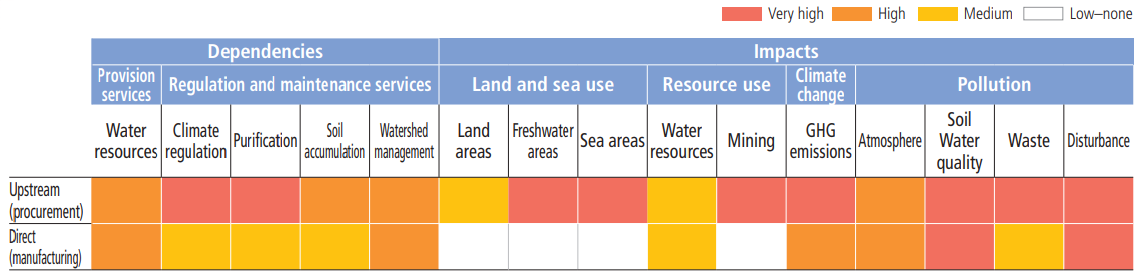
- ※ENCORE(Exploring Natural Capital Opportunities, Risks and Exposure):tool for assessing natural capital in individual industrial sectors, developed by the United Nations Environment Programme Finance Initiative (UNEP FI)
- ※ The mineral resources used in this assessment are those on the High Impact Commodity List prepared by the Taskforce on Nature-related Financial Disclosures (TNFD).
Identifying priority locations
For manufacturing in direct operations and procurement of mineral resources in the upstream supply chain, we used field-specific tools*3 for biodiversity and water risk to analyze indicators related to natural capital in detail and to evaluate natural vulnerabilities at each facility (e.g., ecosystem richness, water stress, and proximity to protected areas).
Based on the results of the analysis, we identified as priority locations those deemed significant with regard to biodiversity and susceptible to impacts generated by our businesses
None of the facilities subject to analysis were found to be located in protected regions of high conservation importance or key biodiversity areas (KBAs).
Through continual monitoring, we will implement appropriate conservation measures and actions in response to any newly discovered risks or change in conservation status.
Detailed assessment of natural dependencies and impacts of direct operations
We analyzed natural-capital vulnerabilities and risks for all 13 manufacturing facilities that carry out direct operations in the Group based on the five criteria of sensitive locations as defined by the TNFD. We also surveyed and reviewed hazard maps and geological information on nearby seas and waterways.
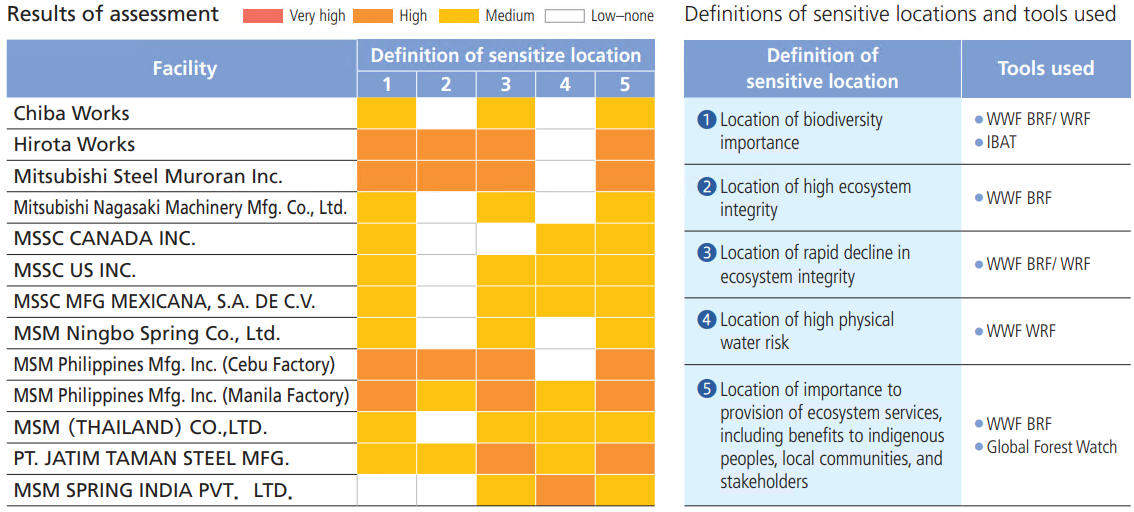
- ※ The following tools were used in assessments based on the five criteria
- ・Biodiversity Risk Filter (BRF): free online tool provided by the World Wide Fund For Nature (WWF) to assess risks related to the main causes of pressure on species, ecosystems, protected locations, and biodiversity by integrating more than 50 spatial data layers
- ・World Wide Fund For Nature (WWF): international environmental protection organization that protects global biodiversity and nature
- ・Water Risk Filter (WRF): water risk evaluation tool developed by the WWF that enables quantitative analysis of water risks for business facilities using operational risk assessments, high-resolution data sets, and risk-evaluation functions based on future scenarios
- ・Integrated Biodiversity Assessment Tool (IBAT): leading biodiversity database operated by the International Union for Conservation of Nature and Natural Resources (IUCN); provides information on subjects such as protected locations, endangered species, and key biodiversity areas (KBAs)
- ・International Union for Conservation of Nature and Natural Resources (IUCN): international nature conservation association that promotes biodiversity conservation and sustainable development based on scientific evidence
- ・Global Forest Watch: forest monitoring platform operated by the World Resources Institute (WRI); provides real-time information on deforestation and forest degradation that can be used to assess forest-related dependencies and impacts.
Detailed assessment of dependencies and impacts on the natural environment upstream in the value chain
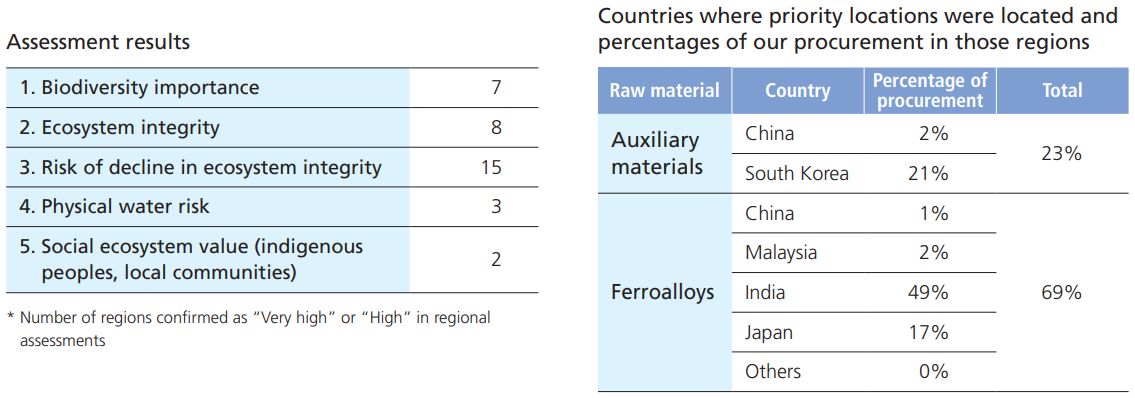
We performed a similar assessment of direct operations at mines and processing plants for auxiliary materials and ferroalloys in the procurement of mineral resources upstream in the value chain
This assessment identified as priority locations 18 facilities that are particularly susceptible to biodiversity impact and that account for 92% of total procurement.
We will continue to enhance our management of nature-related risks throughout the value chain through regular joint efforts with suppliers.
- ※The remaining 8% were excluded from priority locations due to small procurement volumes.
We promote procurement activities that emphasize legal and regulatory compliance, environmental protection, and respect for human rights, pursuant to the Sustainable Procurement Guidelines. We review suppliers for use of conflict minerals (tin, tantalum, tungsten, and gold) and report them using the Responsible Minerals Initiative (RMI) survey template as needed.
Main biodiversity conservation and recovery initiatives
In 2024, we joined the Keidanren Initiative for Biodiversity and announced our support for the Keidanren Declaration for Biodiversity and Guideline.
We have also begun activities as a member of the Taskforce on Nature-related Financial Disclosures (TNFD) Forum.
Cycling of raw materials, auxiliary materials, etc.
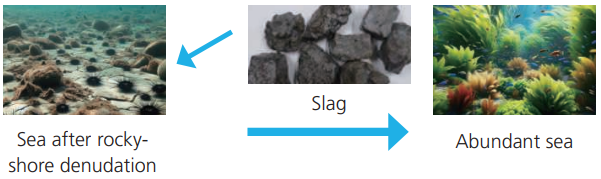
Developing a new product that uses steel slag to form seaweed beds
Declining seaweed beds due to desertification of the sea through a process called rocky-shore denudation has emerged as an issue in recent years. Steel slag, a byproduct of the steelmaking process, contains nitrogen, phosphorus, iron and other nutrients that help seaweed grow and can be used to revive seaweed beds. Other anticipated benefits include growth in numbers of fish and shellfish that eat and inhabit seaweed and the capacity of renewed seaweed beds to absorb CO2 from the atmosphere. For these reasons, we are proceeding with development of this product through partnerships with local governments as a new business that will help address biodiversity issues.
Refractory recycling
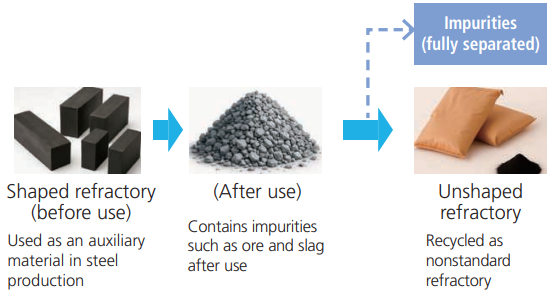
We are making progress toward our target of zero emissions of used refractories from the steel production process. Previously, most refractories used in the production process were disposed of as waste due to the difficulty of recycling them due to the impurities contained, but we are currently developing a proprietary technology to segregate these impurities more effectively and efficiently.
Reusing raw materials in the manufacturing process
The Special Steel Bars Business subsidiary in Indonesia (JATIM) collects leaf springs found to be defective in processing by customers and reuses them as scrap raw materials for leaf spring production. It also reuses defective products from its own manufacturing process as scrap metals after categorizing them by steel type.
The Formed & Fabricated Products Business in Japan is also striving to reduce and recycle waste as raw materials through the reuse of nonstandard products generated in the powder production process as molten materials.
In addition, we are promoting resource conservation, use of renewable energy, emissions reductions, and other efforts to minimize the dependency of our business activities on natural capital through various protective measures.
Participation in environmental conservation activities
Arakawa riverside environmental conservation activities
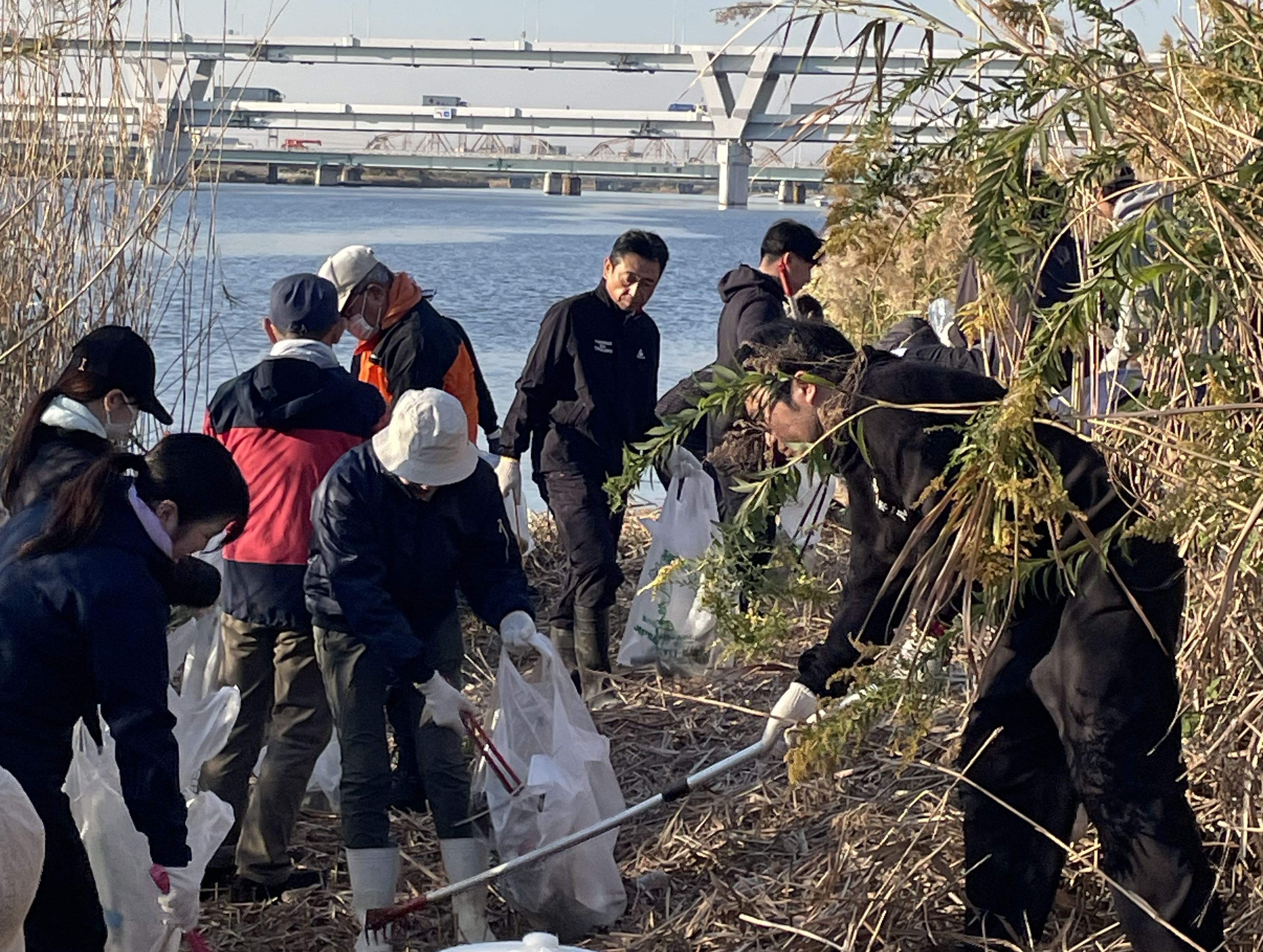
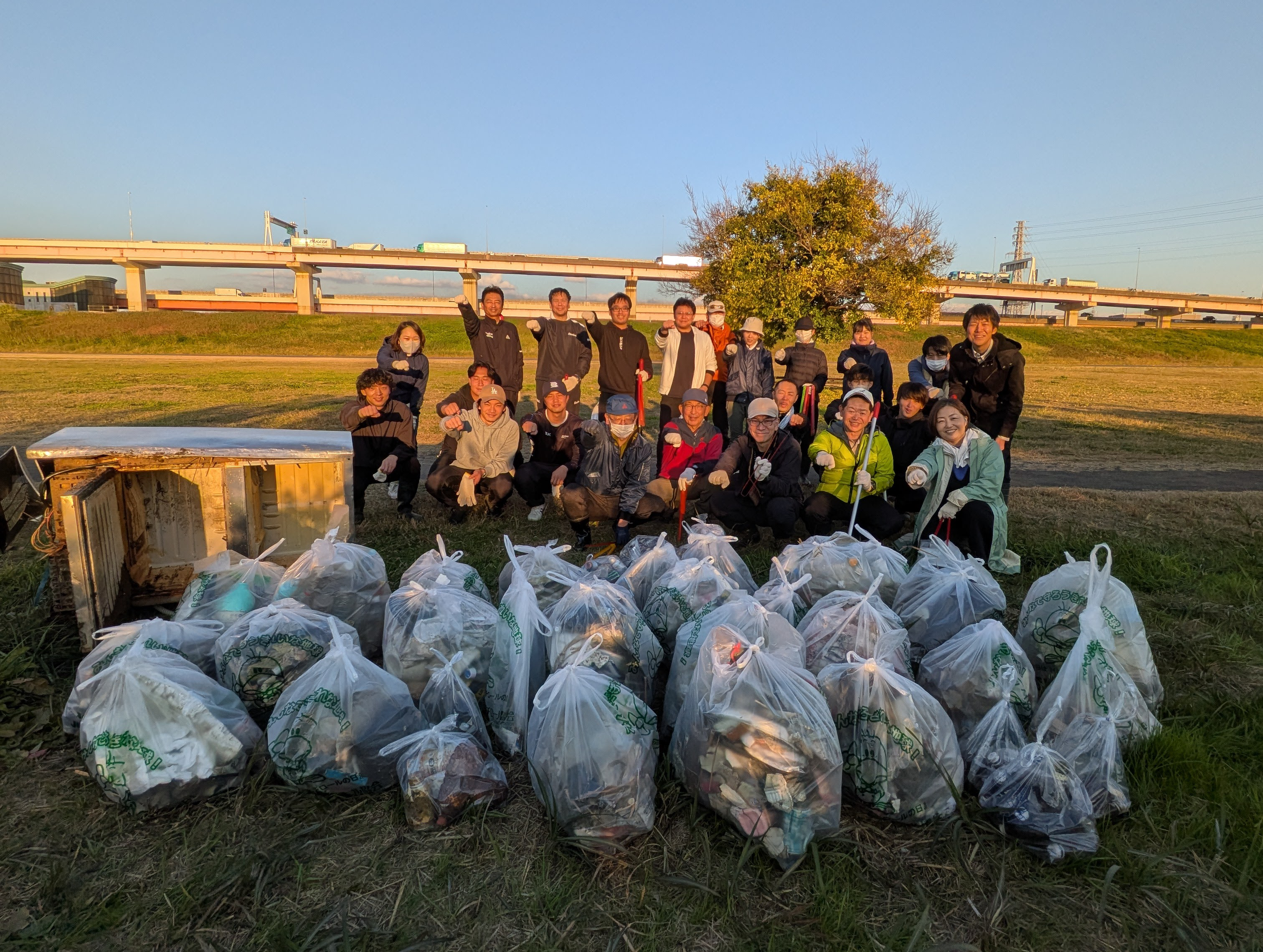
To protect the environment while educating and raising awareness among employees, we participated in the Satokawa Creation Project organized by the nonprofit Arakawa Clean-aid Forum. In addition to cleaning riverbanks and removing invasive weeds to restore natural flora, participants learned in lectures and workshops about the impact of river waste on the planet and the issue of ocean plastic waste. In FY2024, 24 people participated in this activity, collecting 20 bags of waste in nearly two hours.
While remaining active in these initiatives, we will promote related information among employees to foster a corporate culture that encourages the conservation and recovery of natural capital, and train human resources to contribute to nature-positive management.
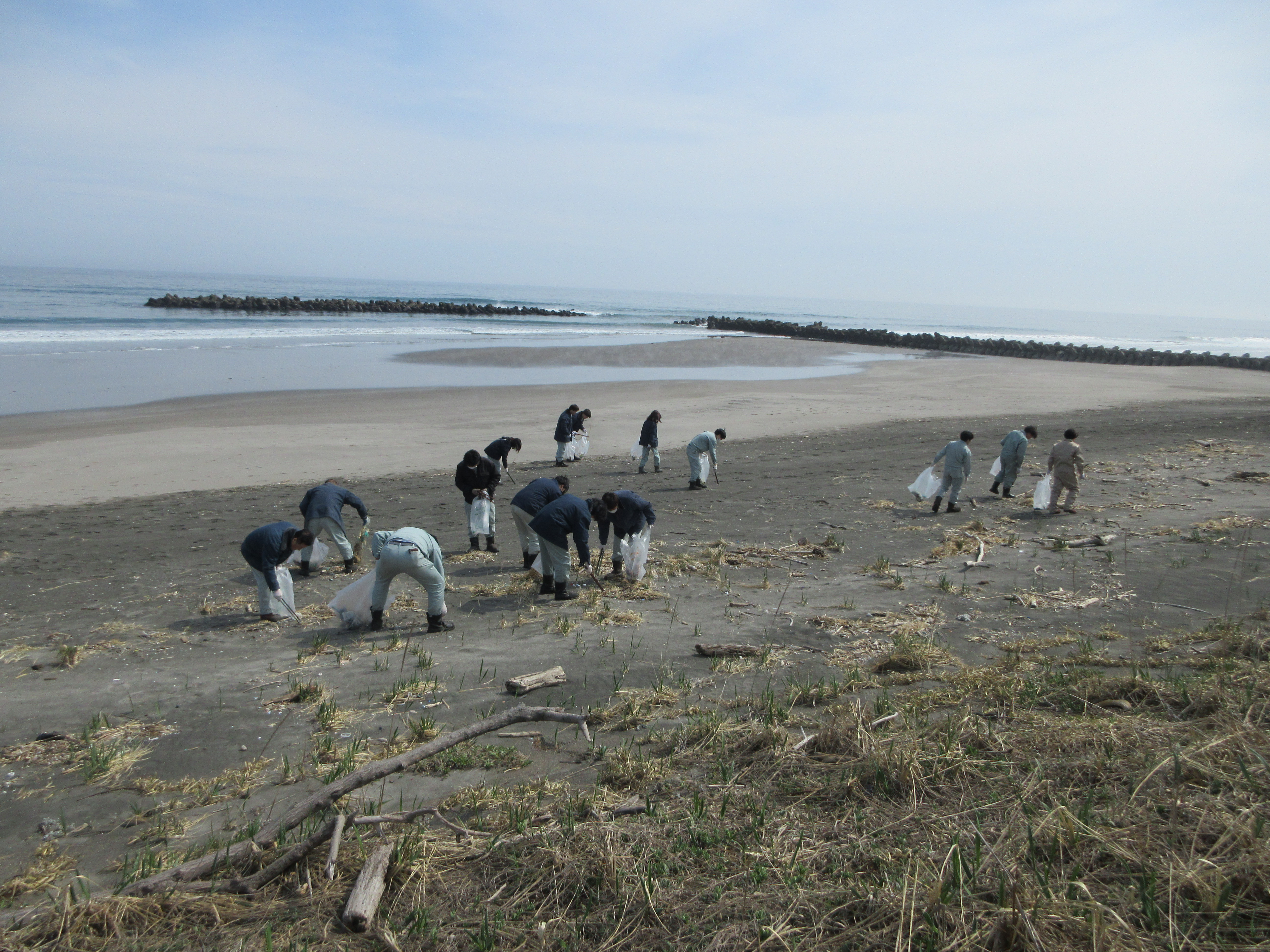
Cleanup activities
Ten employees of Mitsubishi Steel Muroran participated in cleanup activities on Itankihama Beach in the city of Muroran. Other facilities also implement beautification activities in the areas around their plants.
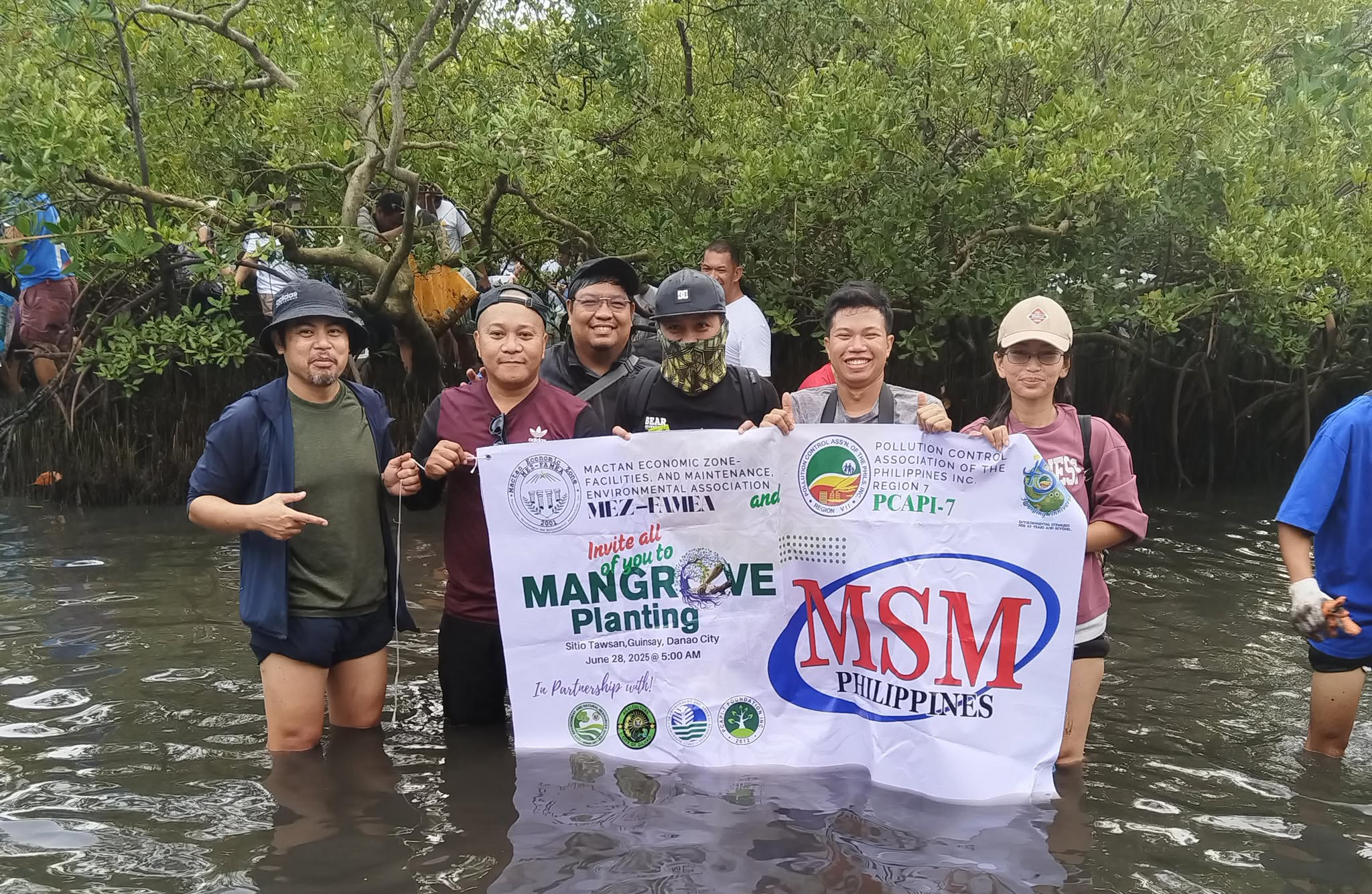
Initiatives at an overseas facility
Ten national staff members at the MSM Philippines Mfg. Inc. Cebu Factory participated in a mangrove-planting to counter global warming, preserve ecosystems, and prevent disasters on the coast. They planted 200 mangrove trees