Respect for human rights
Basic concept
The Group recognizes respect for human rights premised on building relationships through engagement with diverse stakeholders as a key management theme. The Mitsubishi Steel Manufacturing Group Corporate Code of Conduct states the following: “The MSM Group respects human rights, personality and diversity, and does not engage in discrimination. We respect employees and secure a safe and comfortable working environment, while also aiming to maintain and improve our corporate vitality.”
We strive to create workplace environments in which all individuals can demonstrate their abilities to the fullest.
To ensure respect for human rights, we are enhancing initiatives based on the three pillars of the United Nations Guiding Principles on Business and Human Rights (UNGPs): protection, respect, and remediation.
We also fulfill our responsibilities as a global enterprise by closely monitoring international regulatory developments, including the EU’s Corporate Sustainability Due Diligence Directive (CSDDD) and IFRS International Sustainability Standards Board (ISSB) standards.
Protection
We are building systems to prevent human rights violations in our activities by establishing the Human Rights Policy, maintaining related systems, and educating employees.
Human Rights Policy
The Group’s Corporate Policy calls for Maximizing Human Capital. We established the Mitsubishi Steel Group Human Rights Policy in 2022 based on the conviction that regard for human rights is fundamental to our business activities. Prepared based on the United Nations Guiding Principles on Business and Human Rights, this Policy serves as our highest-level policy concerning human rights
Mitsubishi Steel Group Human Rights Policy
The Mitsubishi Steel Group’s Corporate Philosophy calls for Maximizing Human Capital. This Mitsubishi Steel Group Human Rights Policy (“Policy” hereinafter) is based on the Mitsubishi Steel Group Code of Conduct, the Detailed Rules for Mitsubishi Steel Group Code of Conduct, and the Basic Policy for Sustainability, and reflects the conviction that respect for human rights is fundamental to our business activities.
Based on the fundamental position of respect for all human rights, as set forth in the Detailed Rules for Mitsubishi Steel Group Code of Conduct, we position this Policy over all other policies related to human rights and intend to fulfill our human rights obligations to all stakeholders involved in or affected by our business activities.
- 1Respect for and compliance with international norms, laws, and regulations concerning respect for human rights
Recognizing respect for human rights as a key corporate social responsibility, the Mitsubishi Steel Group supports various international declarations on human rights, including the International Bill of Human Rights (the Universal Declaration of Human Rights, the International Covenant on Civil and Political Rights, and the International Covenant on Economic, Social and Cultural Rights) and the International Labour Organization (ILO) Declaration on Fundamental Principles and Rights at Work. The Mitsubishi Steel Group promotes human rights initiatives based on the United Nations (UN) Guiding Principles on Business and Human Rights. The Mitsubishi Steel Group is in full compliance with the laws and regulations of all countries and regions in which we do business. In the event of conflicts between national or regional laws and regulations and international norms on human rights, we will make every effort to fulfill our obligations to internationally recognized human rights while complying with national and regional laws and regulations.
- 2Scope
This Policy applies to all Mitsubishi Steel Group officers and employees, including permanent, contracted, and temporary employees. Additionally, all business partners, including members of the supply chain, are expected to have an understanding of and support this Policy.
- 3Obligation to respect human rights
The Mitsubishi Steel Group recognizes the risk that its business activities may, directly or indirectly, affect the human rights of stakeholders. In addition to establishing responsible labor practices, including measures to prohibit discrimination and harassment, eliminate any use of forced or child labor, and ensure safe, healthy working environments, the Mitsubishi Steel Group will strive to prevent and mitigate any actual or potential harm to the internationally recognized human rights of all our stakeholders and to take appropriate corrective measures in response to any such harm. The Group will strive to avoid indirect involvement in human rights violations by encouraging all business partners, including any members of the Group supply chain, implicated in activities damaging to human rights, to respond appropriately and to avoid future human rights violations.
- 4Human rights governance and promotion structure
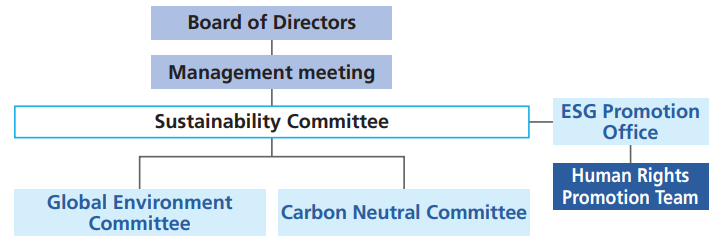
Chaired by the Representative Director, President & CEO, the Sustainability Committee deliberates on matters such as policies and measures for responding to human rights issues within the Mitsubishi Steel Group and reports periodically to the Board of Directors on the state of compliance with this Policy and the specifics of its human rights initiatives. The Mitsubishi Steel Group promotes human rights initiatives under the supervision of the Board.
- 5Human rights due diligence structure
To fulfill its human rights obligations, the Mitsubishi Steel Group plans to develop and establish a human rights due diligence structure that meets the requirements of the UN Guiding Principles on Business and Human Rights; identify and assess any actual or potential violations of human rights in its business activities and supply chain; and undertake sustained efforts to prevent and mitigate any such violations. In addition, to confirm the efficacy of and to continually strengthen such initiatives, the Mitsubishi Steel Group will monitor and evaluate the effects of various initiatives and disclose the details of human rights initiatives in a timely and appropriate manner.
- 6Correction and relief
If it is determined that we have caused or furthered or are in any other way implicated in human rights violations through our business activities, the Mitsubishi Steel Group will strive to investigate the causes, take action to prevent their recurrence, and seek appropriate remedies. We will also maintain and continue to build on structures that enable sustained and effective discussion to facilitate such corrective and remedial measures.
- 7Dialogue and discussions with stakeholders
Based on a recognition of the importance of assessing and reviewing human rights initiatives, including identifying, assessing, and responding to any human rights violations associated with our business activities from the perspectives of the stakeholders affected, the Mitsubishi Steel Group will engage in ongoing dialogue and discussions with stakeholders and outside experts.
- 8Disclosure
The Mitsubishi Steel Group will disclose information on its human rights initiatives through appropriate means, including publication on its website.
- 9Promoting awareness of the Human Rights Policy and related training
To ensure understanding of this Policy throughout the Group, the Mitsubishi Steel Group will incorporate the spirit of this Policy in its basic procedures and implement regular and ongoing training for officers and employees as part of efforts to foster a culture in which respect for human rights plays a central role.
This Policy has been approved by the Board of Directors of Mitsubishi Steel Mfg. Co., Ltd. Established: November 8, 2022
Promotion structure
Under the leadership of top management, the Human Rights Promotion Team promotes human rights initiatives jointly with related sections. Specifically, we are promoting regular risk review and improvement activities through deliberation and reporting in the Sustainability Committee (chaired by the President and CEO) and oversight by the director responsible for sustainability.
Employee education
Based on an increasing focus on the risk of human rights violations in business activities in recent years, we carry out training on business and human rights as well as diversity promotion training to strengthen awareness among all employees. We eliminate human rights risks and create workplaces in which all can work with vitality by establishing systems to help employees of Group companies in Japan understand that they could be involved in human rights risks and to acknowledge mutual differences in our increasingly diverse workforce. As part of our compliance training, we are maintaining the individual interviews and training programs that have been in place since FY2023.
| Theme | 2023 | 2024 |
|---|---|---|
| Unconscious bias | 79.1 | - |
| Consideration for those with disabilities | 51.9 | - |
| Business and human rights | - | 75.0 |
| Balancing work and long-term care | - | 63.0 |
Respect
As an enterprise with a global supply chain active in the production of special steel bars and auto parts, the Group considers respect for human rights to be a cornerstone of its business activities. Based on the United Nations Guiding Principles on Business and Human Rights, the ILO convention, and other principles, we identify, assess, and respond systematically to human rights risks.
Identifying human rights risks
To ascertain and manage the impact of our business activities on human rights, we are building and implementing processes to identify human rights risks based on international norms. Specifically, we implement dialogue with stakeholders and risk assessments to respond appropriately to risks such as the following:
| Risk type | Subject group | Measures |
| Workplace accidents | Group employees and employees of suppliers and other third parties | Health and safety management systems and accident prevention measures pursuant to laws and regulations |
| Conflict minerals | Workers, women, children | Responsible Minerals Initiative (RMI) CMRT/EMRT surveys |
| Forced labor, child labor | Workers, women, children | Compliance with the Sustainable Procurement Guidelines (supplier code of conduct) / compliance in employment of young workers |
| Deterioration in working conditions | Group employees and employees of suppliers and other third parties | Rectification of working hours and wages, labor-management discussions and management to improve working environments |
| Discrimination, harassment | Group employees, women, foreign workers, suppliers, and employees of suppliers and other third parties | Internal whistleblowing hotline, harassment hotline, monitoring of fair compensation and promotion opportunities, training and awareness-raising activities, consideration for linguistic and cultural barriers |
| Infringement on land rights | Indigenous peoples, local communities | Dialogue and consultation with indigenous peoples (on environmental impact) |
Human rights due diligence
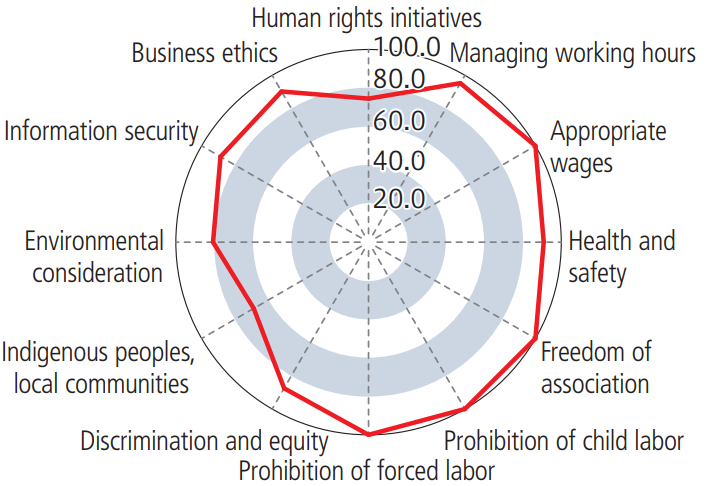
We launched human rights due diligence efforts for domestic subsidiaries in FY2022 and related efforts for overseas subsidiaries in FY2023. While the results indicate no serious violations in the Group in Japan or overseas, we did identify various notable cases, including harassment incidents, inadequate facilities, and inadequate procedures for reviewing various types of personal information before employment based on overseas business practices. We are striving to reduce risks through training and education on these matters.
Since FY2019, we’ve used CSR surveys to implement appropriate due diligence on matters including human rights risks, including risks related to child labor and forced labor, at suppliers. In FY2024, we selected and surveyed 17 major suppliers of raw materials associated with potential human rights risks. The scope of this survey, combined with the scope of suppliers subject to the RMI-based survey of conflict minerals and the CSR survey, accounted for about 70% of all purchases from primary suppliers. While this survey identified no serious risks, we recognize room for improvement in various areas, including the frequency of human rights initiatives. In response, we have formulated the Sustainable Procurement Guidelines to clearly describe matters on which we are requesting further efforts, and are considering holding briefings starting next year to raise awareness of these guidelines.
| Primary suppliers | Mitsubishi Steel (consolidated) | Forced labor | Discrimination |
| Child labor | Health and safety | ||
| Freedom of association | Responsible procurement | ||
| Collective bargaining rights | Anticorruption | ||
| Environmental consideration | Business ethics | ||
| Information security | Indigenous peoples, local communities |
Remediation
Remediation mechanisms
In addition to our existing internal whistleblowing and harassment hotlines, we are establishing a hotline on the corporate website to extend human rights consultations to employees of suppliers who could not access existing hotlines.